An AI-Powered System for
Difficult Conversations
An interactive installation exploring AI's role in emotional communication
Project
Back Pocket Empathy
Role
Interaction Designer & Creative Technologist (sole contributor)
Year
2026
Tools
Fusion 360, VSCode,
Claude Code, Flask, Claude API
Overview
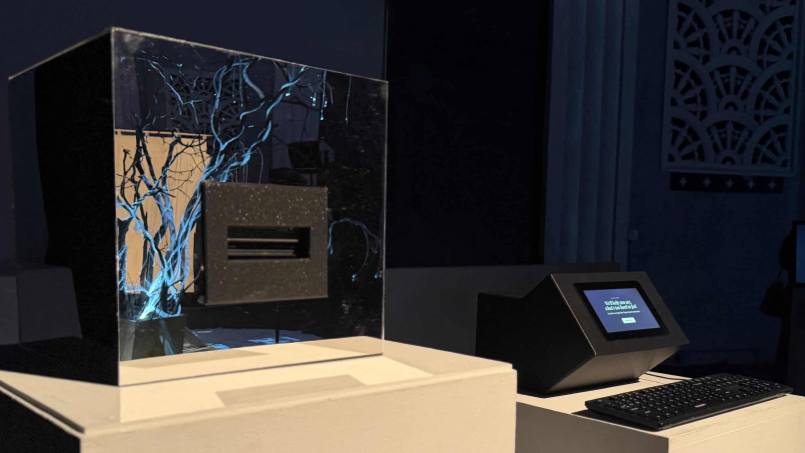
Backpocket Empathy is an interactive installation and companion website originally exhibited in 2026 at the Grey Area Foundation for the Arts in San Francisco as part of ./local_memory: Soft Systems.

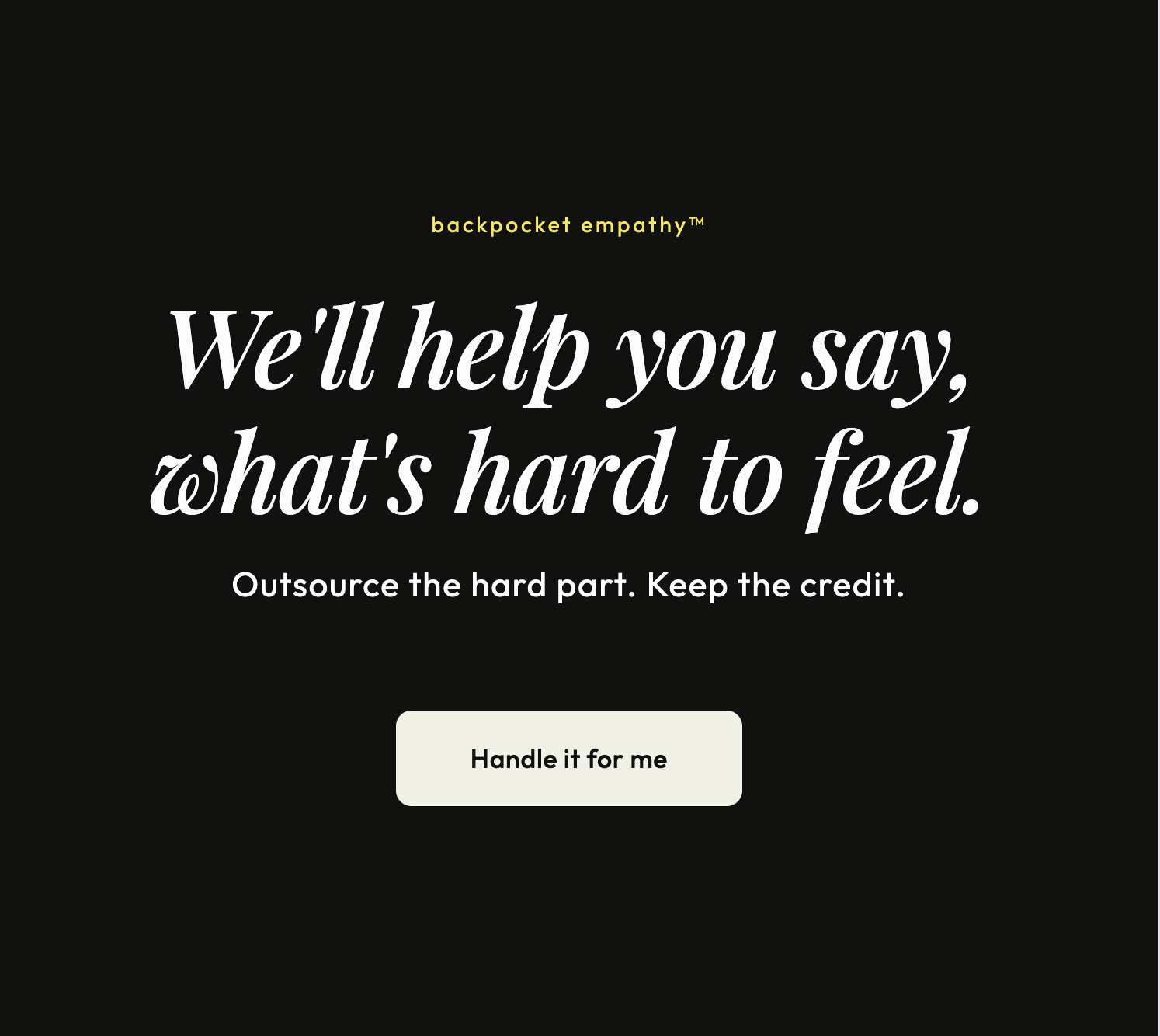
The project generates personalized apology and confrontation scripts to help users navigate difficult conversations. It examines the tension between emotional support and emotional outsourcing, asking what happens when machines mediate human vulnerability. The companion website extends the experience beyond the gallery, allowing visitors to continue engaging with the system.

Depending on the users approach, the system can act as a personal growth tool,
or an emotional outsourcing machine.
How It Works

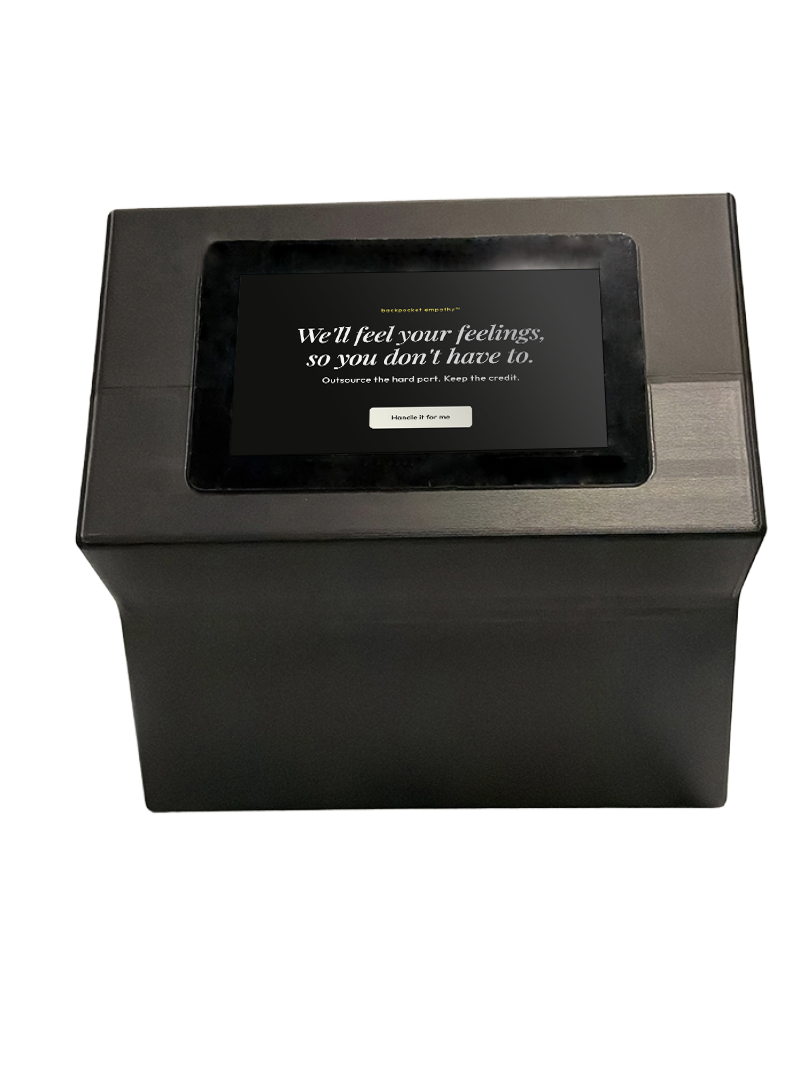
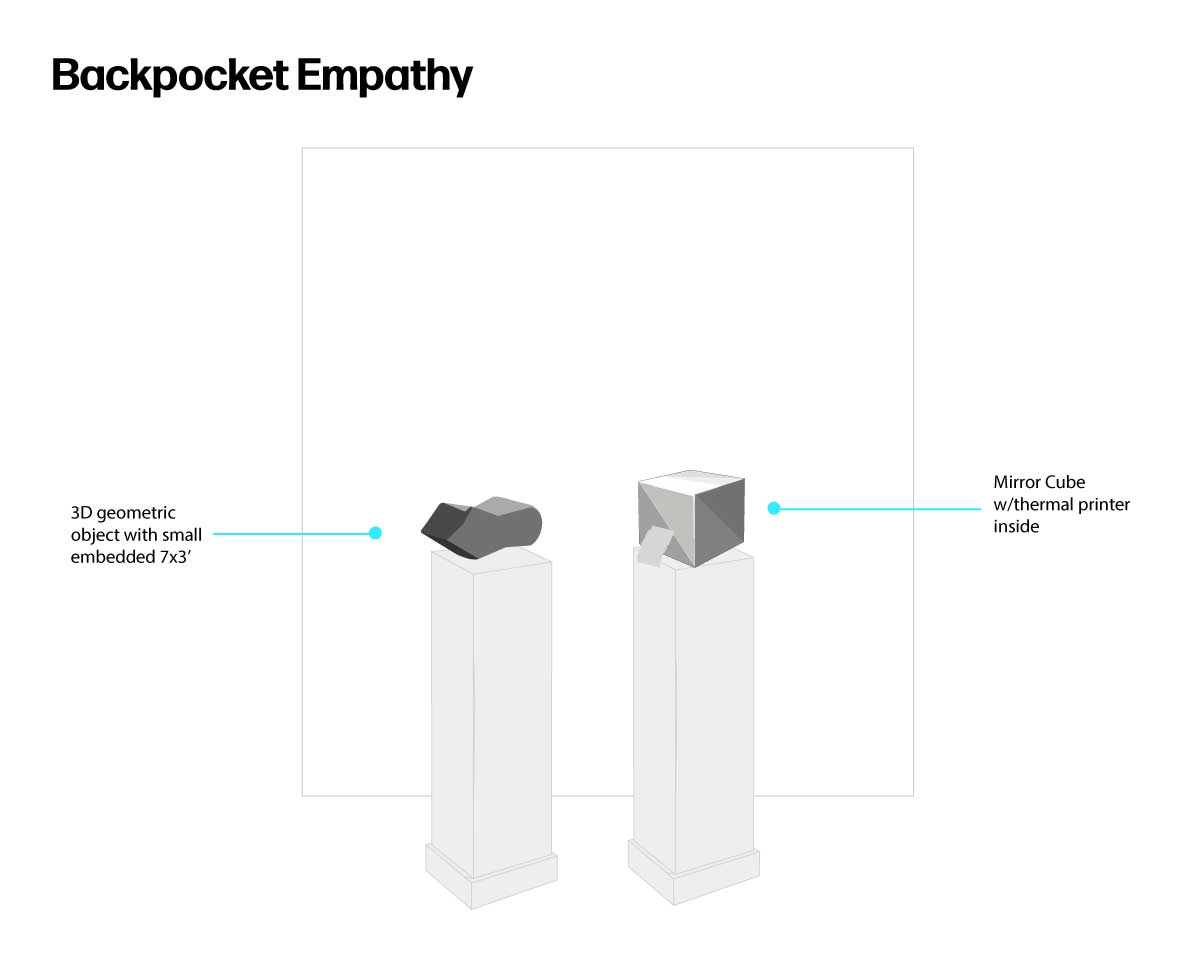
Backpocket Empathy takes the form of a fictional retro-futuristic home assistant with an integrated printer, designed to function as both a practical household object and sculptural artifact.

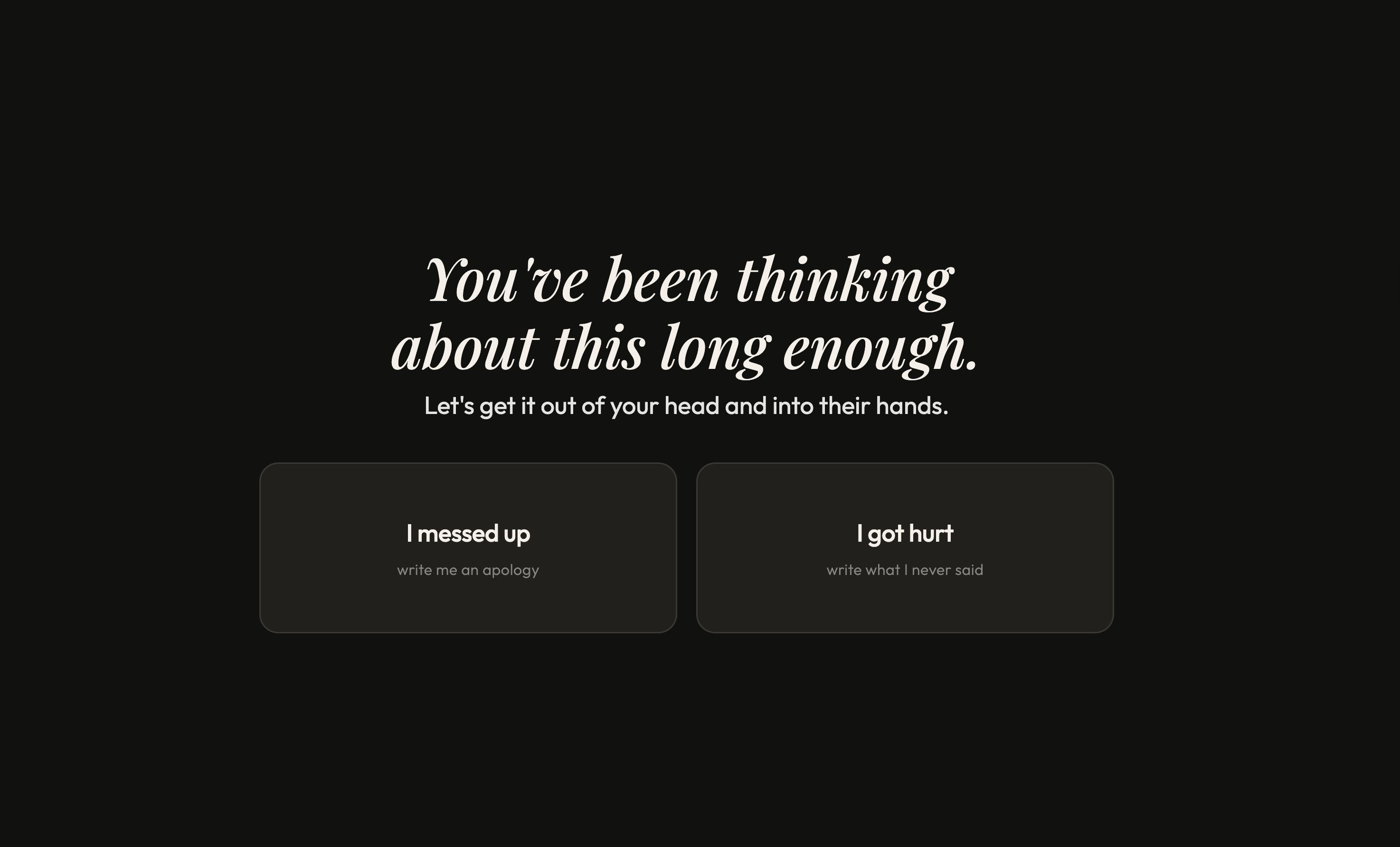
The experience begins with a touchscreen interaction where visitors choose between creating an Apology Message or a Confrontation Message. The initial question—“Were you hurt?” or “Did you hurt someone?”—determines which conversational pathway the system follows.
Although both pathways share the same overall structure, each is designed around a different emotional goal:

Apology: Focuses on ownership, accountability, repair, and understanding the other person’s experience.

Confrontation: Focuses on expressing harm, communicating needs, and helping the user feel heard.
After submitting their responses, visitors initiate the printing process and experience a short processing sequence with prompts such as “simulating empathy,” drawing attention to the system’s role as both a tool and a substitute for human emotional effort.

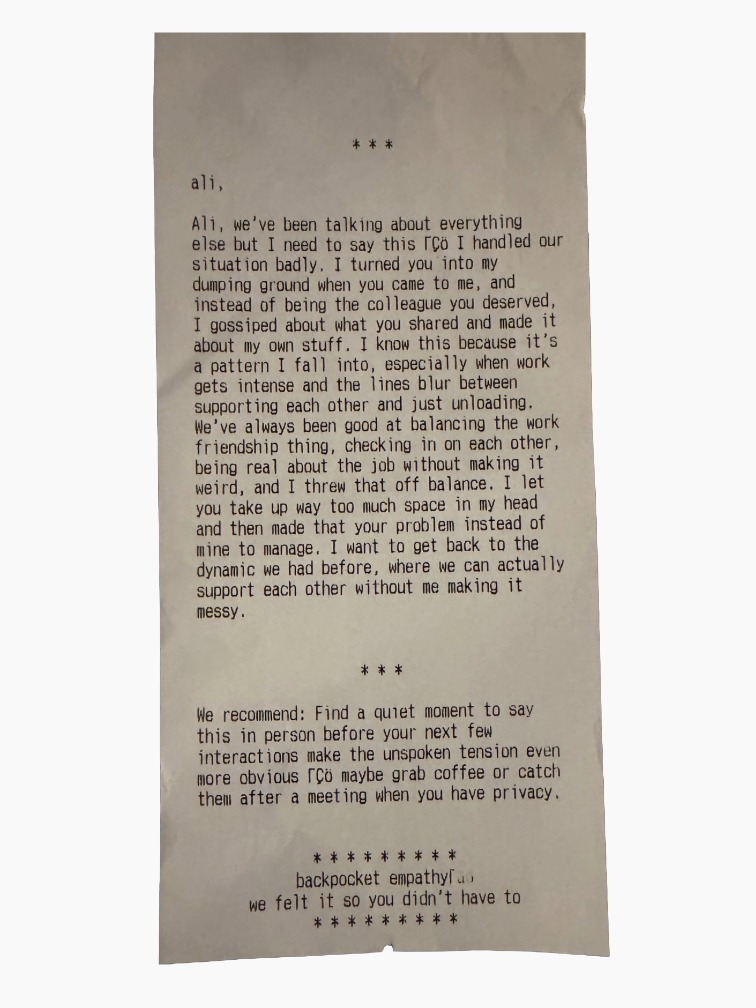
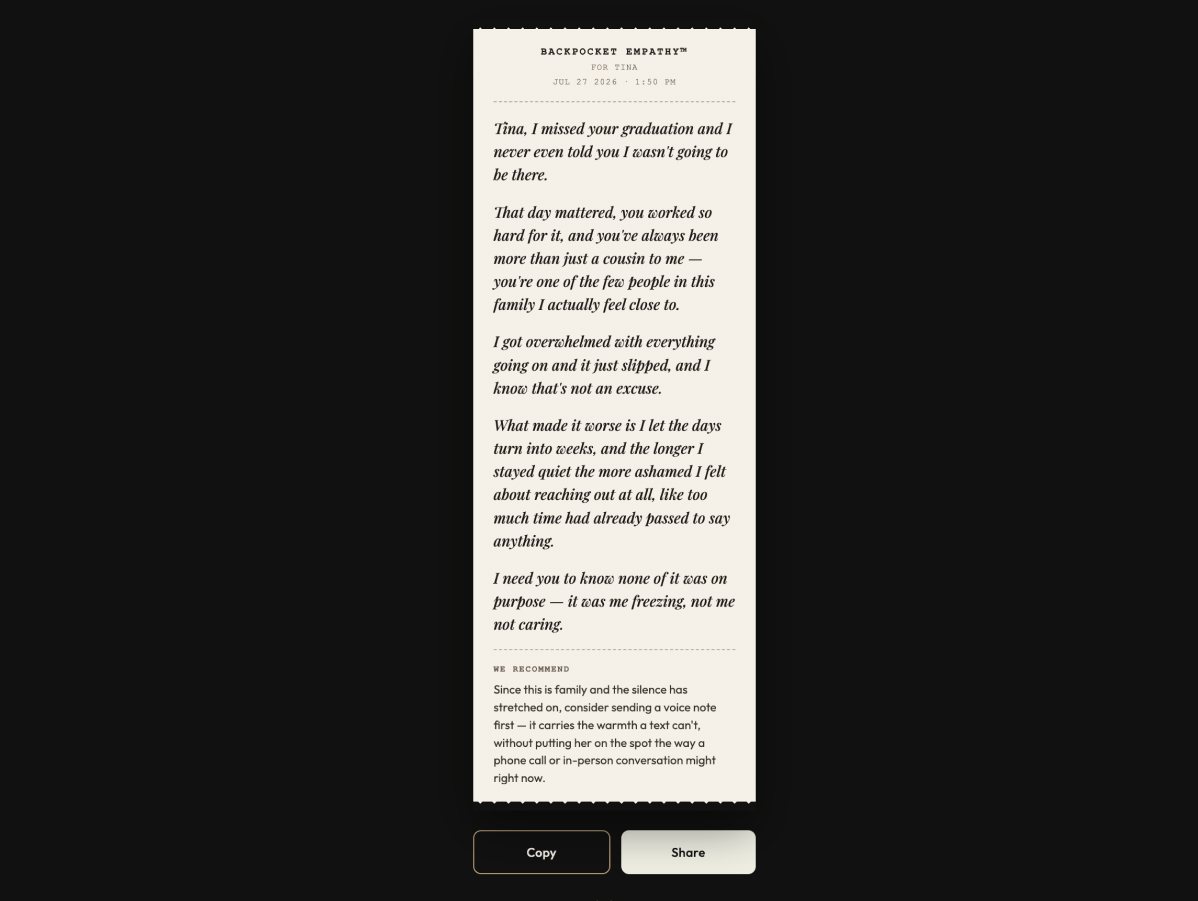
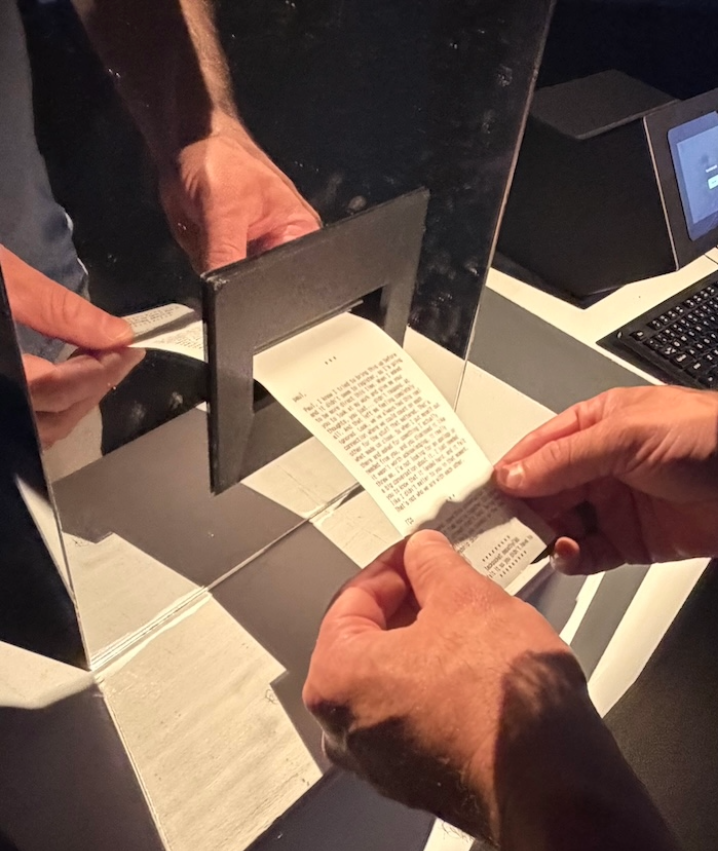
The final script is printed onto receipt paper, creating a physical artifact designed to be carried into a future conversation.
This is some text inside of a div block.
Designing the Physical Objects
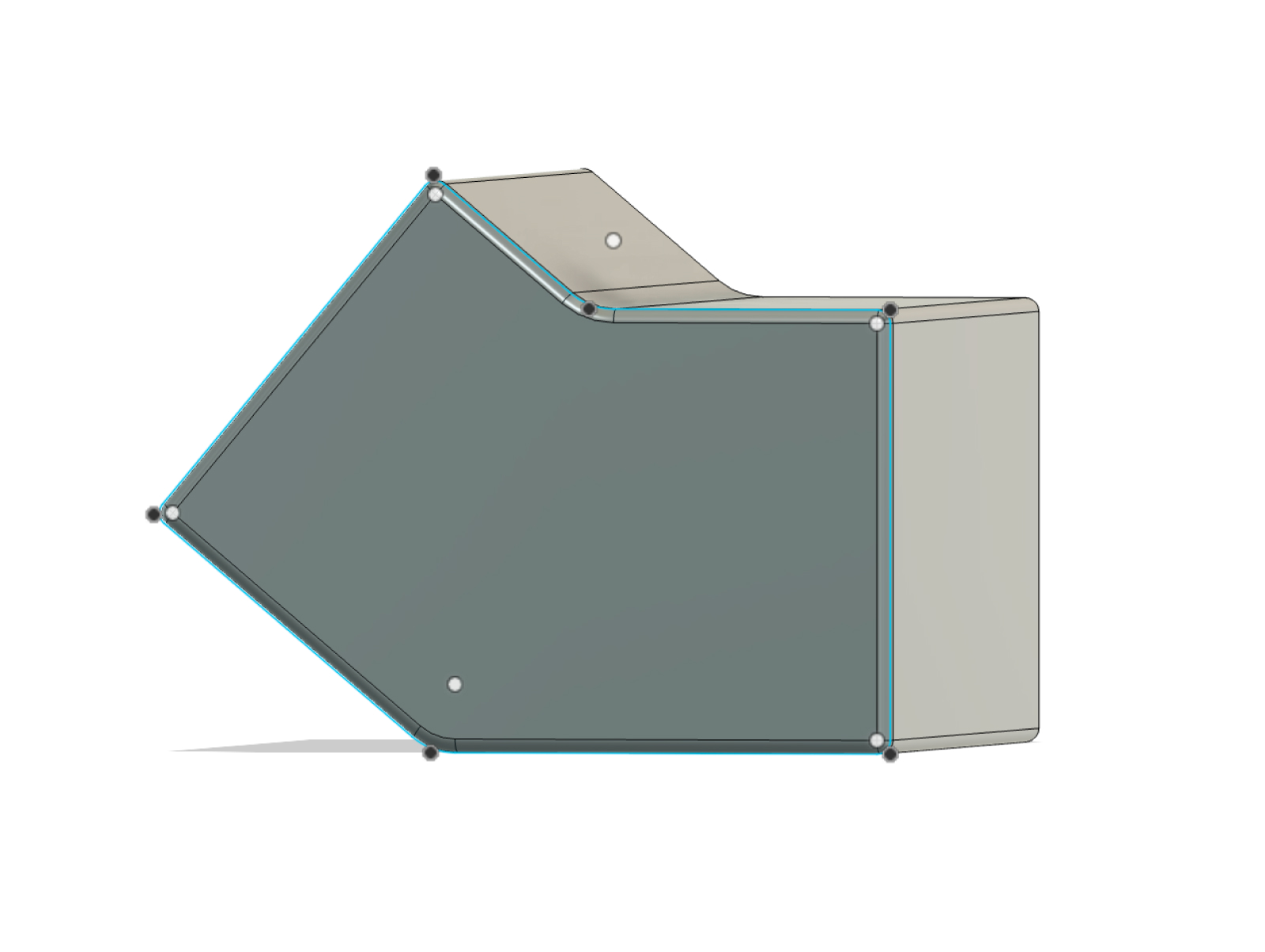
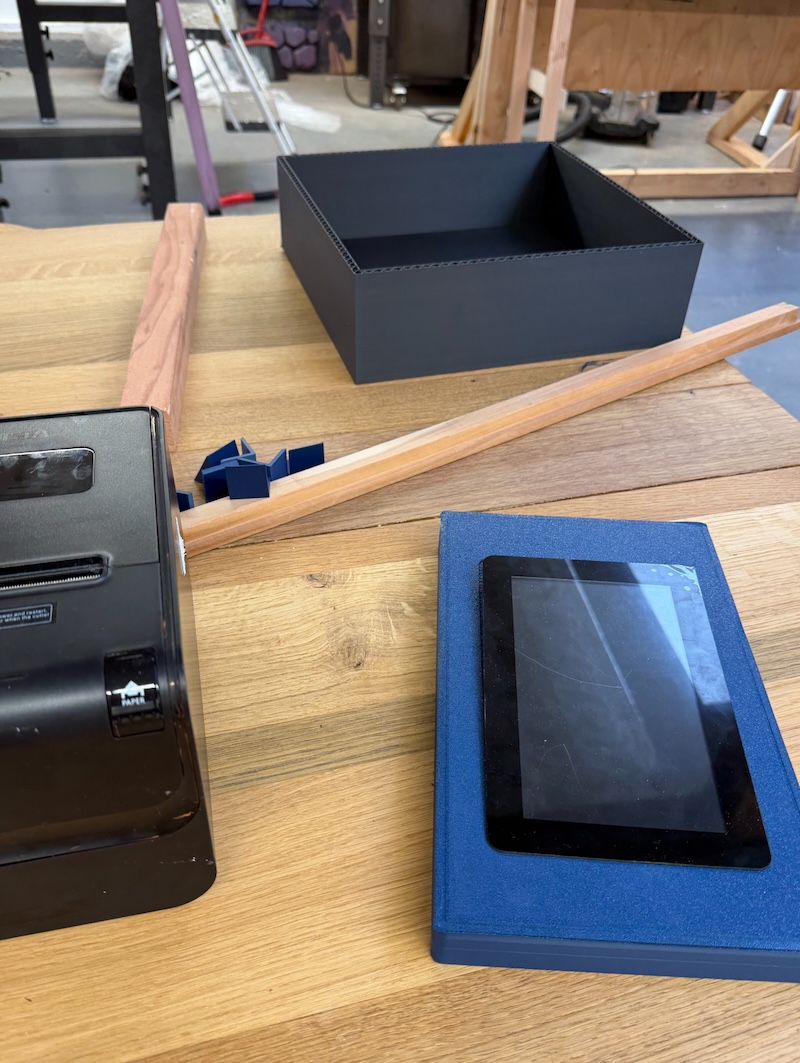
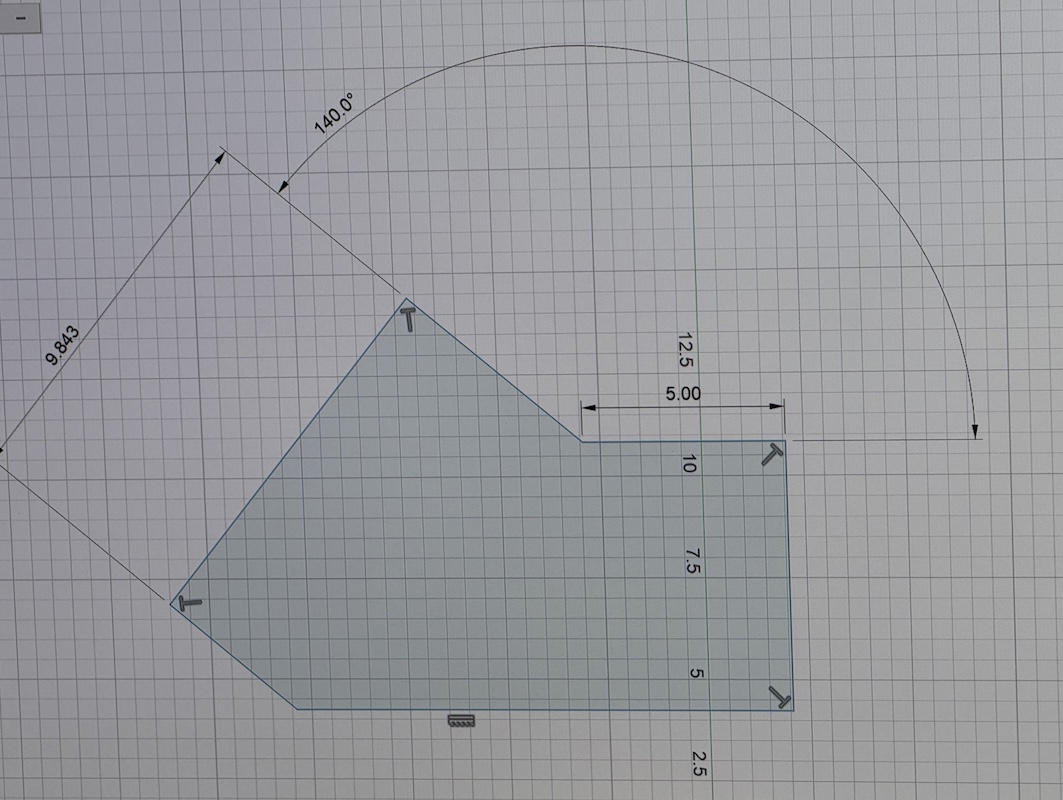
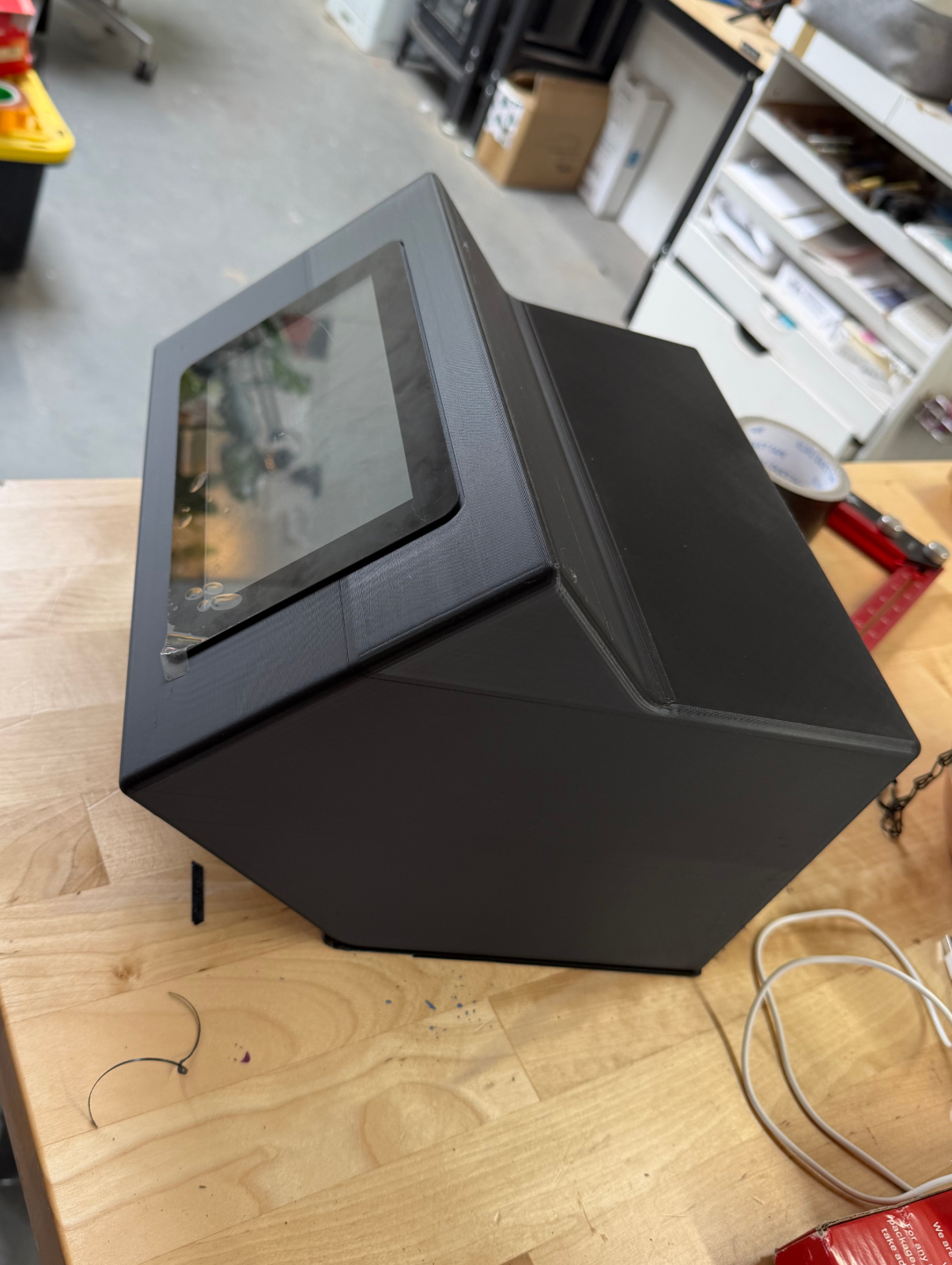
The physical form of Backpocket Empathy was designed to create a relationship between digital generation and human action. The home-object casing was modeled in Fusion 360 and 3D printed, drawing from the retro-futuristic language of mid-20th-century domestic technology with a cybernetic twist. I wanted the device to feel familiar enough to invite interaction, yet slightly unfamiliar enough to encourage curiosity.

The enclosure was designed around both aesthetic and technical constraints, incorporating space for a Raspberry Pi, a flush-mounted touchscreen, and the internal components required for the printer system. Reflective acrylic was used for the printer enclosure to represent the self-reflection involved in the experience, while the cube form references the “black box” nature of AI systems and the opacity behind machine-generated responses.
The printed receipt transforms an ephemeral AI-generated response into a tangible artifact—something personal enough to carry, revisit, or bring into a meaningful conversation. The “back pocket” metaphor reflects the project’s central idea: the system provides language, but the responsibility of communication remains with the person using it.
Designing the AI System's Voice
Generative AI can produce convincing language, but without constraints, outputs can become generic, overly emotional, or disconnected from the user’s actual experience. The challenge was creating a system that felt personal without pretending the machine actually understood human emotion.

The system uses Claude API with extensive prompt engineering to guide how messages are generated. The model is instructed to write in the visitor’s first-person voice and incorporate principles from communication frameworks including Nonviolent Communication and DEAR MAN.

These frameworks informed how messages:acknowledge emotions, take accountability, communicate needs, encourage constructive dialogue
Rather than simply transforming inputs into text, the system considers the user’s emotional framing, the recipient’s perspective, and the intended purpose of the conversation.The generated scripts were constrained to 150–180 words. Through testing, this length created a balance between emotional depth and physical practicality, allowing the message to feel meaningful while remaining small enough to become a take-home artifact.
The system produces responses that vary based on the user’s level of engagement. Detailed reflection allows the model to create messages closer to what a user may have expressed themselves, while limited input results in a more synthesized response.
Designing for Emotional Input
Interpersonal conflicts are complex, emotional, and highly contextual. A system that asks users for too much information becomes overwhelming, while one that asks too little risks producing generic or inaccurate responses.

I designed a guided reflection process that balances structure with personal expression. Instead of requiring visitors to write a full explanation of their conflict, the experience uses short multiple-choice questions to establish emotional context and an open-ended response to capture personal details.

The branching structure was designed around the different emotional needs behind apology and confrontation:
The Apology Pathway Explores:
The Confrontation Pathway Explores:
  • What happened
  • How the other person may have been affected
  • What the user takes responsibility for
  • What they hope to repair
  • What happened
  • How the situation affected the user
  • What they need the other person to understand
  • Whether the relationship is something they want to continue
The final interaction was designed to be completed in under three minutes, allowing visitors to engage in meaningful reflection while standing alone in a public gallery environment.
Designing for a Public Installation
Unlike a private communication tool, the installation existed in a gallery environment where visitors had limited time, privacy, and familiarity with the system.

The interface was designed specifically for touchscreen and keyboard interaction in a dark gallery setting. The flow needed to be intuitive enough for someone encountering the object alone without explanation. During the printing process, the interface displays messages such as “simulating empathy” to create a moment of reflection and make the system’s role visible rather than hiding the AI process.
The installation became not only a tool for generating messages, but also a moment for visitors to consider their relationship with AI-mediated emotional experiences.
Companion Website

After the exhibition, visitors expressed interest in continuing to use the system outside the gallery, leading to the development of a companion website that extends the experience beyond the physical installation.

I created a companion website to serve as the digital version of the project.
It can be viewed at www.backpocketempathy.com
Results & Reflections
Backpocket Empathy, exhibited at Grey Area Foundation for the Arts, let visitors generate personalized conflict-resolution scripts. What started as an exploration of the question "can AI help people say what they struggle to express?" became a study of the line between assistance and replacement. Ultimately, the tension became: AI can craft the message, but not the vulnerability behind it.
Whats Next...
Backpocket Empathy was originally positioned as a critical design piece; however, after feedback and informal interviews with dozens of participants, it became clear there was an opportunity to iterate on this project and create a tool that could support others in different contexts.

This has been the inspiration for my current project, Say It Support, a communication tool grounded in psychological communication frameworks to help individuals communicate in high-context situations.